Hair thinning at the crown
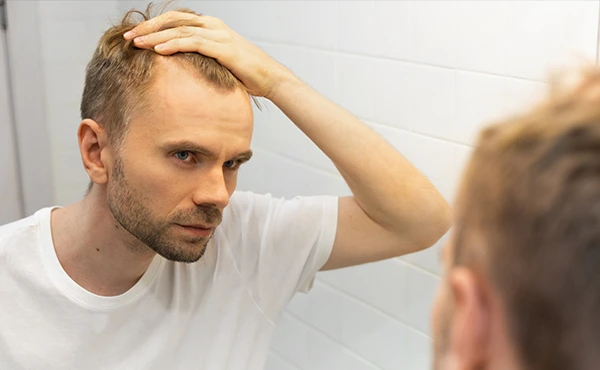
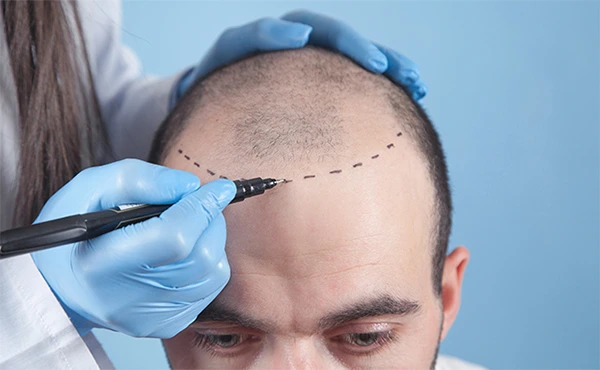
Hair thinning at the crown is one of the most common and challenging stages of androgenetic alopecia. This area gradually loses density, resulting in increased visibility of the scalp. Due to its location, thinning in this region is often not immediately noticed by the individual, which can delay diagnosis and appropriate treatment.
Causes
Symptoms
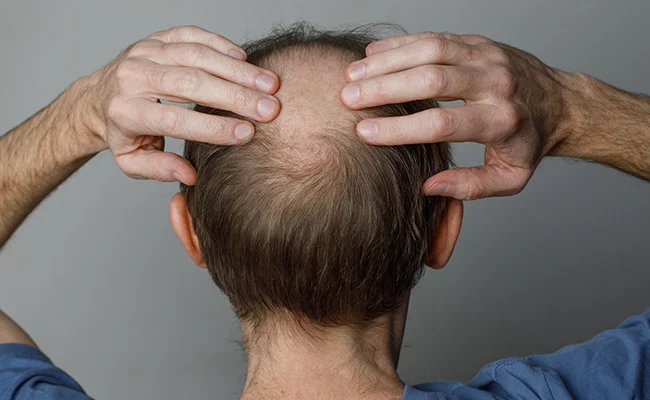
Thinning at the crown begins with gradual miniaturization of the hair shaft, without an immediate loss of a large number of hairs. The individual notices changes during hair styling, and over time the scalp at the crown becomes visible under light. As time progresses, the area becomes increasingly sparse, forming the characteristic circular pattern.
Often, the person may notice hairs on the pillow or during washing, along with increased oiliness, mild itching, or irritation—factors that further compromise the quality of the existing hair.
Treatment options
Hair transplantation at the crown
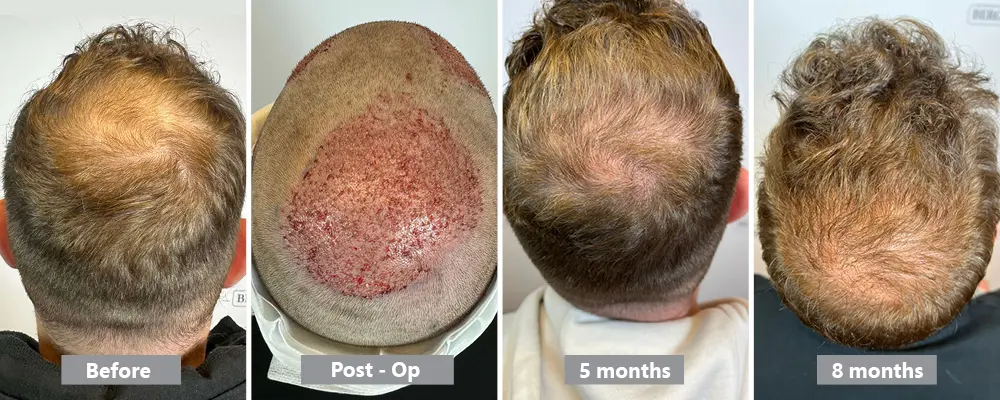
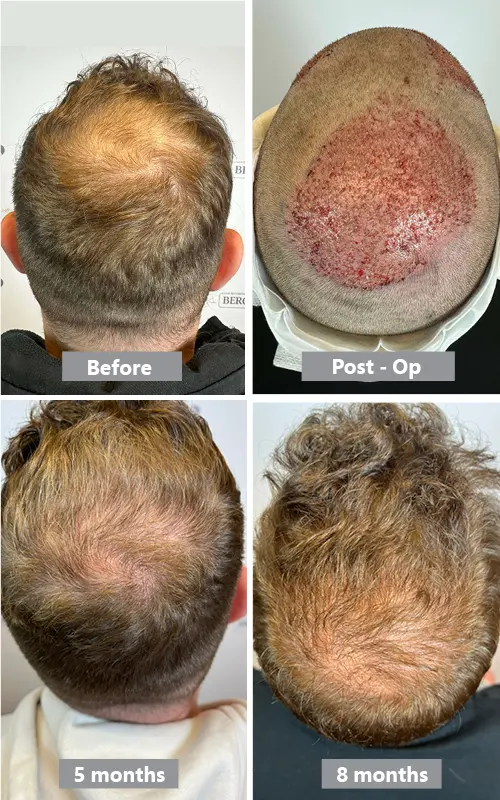
Hair transplantation at the crown is the most technically demanding area. This is because hair grows in a circular pattern with varying angles, requiring precise planning, very high density, and correct implantation angles to achieve a natural result. Incorrect graft placement can lead to an unnatural appearance, making the outcome look artificial.
Non invasive options
Minoxidil
Autologous PRP Mesotherapy
Ideal for early stages of thinning, it improves microcirculation and stimulates hair follicles. PRP therapy is indicated both as a preventive treatment and as supportive care after hair transplantation at the crown.
Treatment options
Hair transplantation at the crown
Hair transplantation at the crown is the most technically demanding area. This is because hair grows in a circular pattern with varying angles, requiring precise planning, very high density, and correct implantation angles to achieve a natural result. Incorrect graft placement can lead to an unnatural appearance, making the outcome look artificial.
Non invasive options
Minoxidil
Autologous PRP Mesotherapy
Ideal for early stages of thinning, it improves microcirculation and stimulates hair follicles. PRP therapy is indicated both as a preventive treatment and as supportive care after hair transplantation at the crown.
Importance of the diagnosis
Accurate diagnosis is achieved through clinical examination, trichoscopy, and medical history analysis. The degree of thinning, the stage of hair loss, and suitability for medical or surgical treatment are determined. Only through specialized evaluation can the appropriate strategy for restoring crown thinning be selected.