


Minoxidil – Treatment against hair loss
Minoxidil is one of the most widely used treatments for hair loss, particularly for androgenetic alopecia. Its effectiveness has been confirmed through numerous clinical studies, making it one of the approved options for addressing scalp thinning and promoting hair growth.
Minoxidil is widely used in topical form by both men and women, aiming to preserve existing hair and slow the progression of alopecia. Although it does not offer a permanent cure, it is an important tool in the pharmaceutical management of hair loss.
Minoxidil has been on the market for many years and is considered one of the safest and most well-established options against hair thinning. In many cases, it can also be combined with hair transplantation—whether with the FUE method or the FUT (Strip) technique—enhancing the final result.
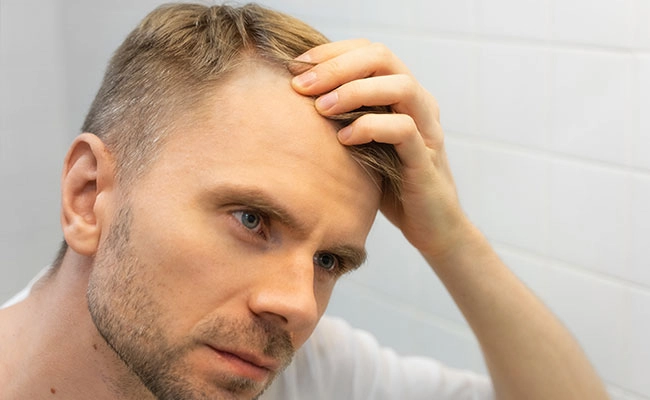
Minoxidil is one of the most widely used treatments for hair loss, particularly for androgenetic alopecia. Its effectiveness has been confirmed through numerous clinical studies, making it one of the approved options for addressing scalp thinning and promoting hair growth.
Minoxidil is widely used in topical form by both men and women, aiming to preserve existing hair and slow the progression of alopecia. Although it does not offer a permanent cure, it is an important tool in the pharmaceutical management of hair loss.
Minoxidil has been on the market for many years and is considered one of the safest and most well-established options against hair thinning. In many cases, it can also be combined with hair transplantation—whether with the FUE method or the FUT (Strip) technique—enhancing the final result.
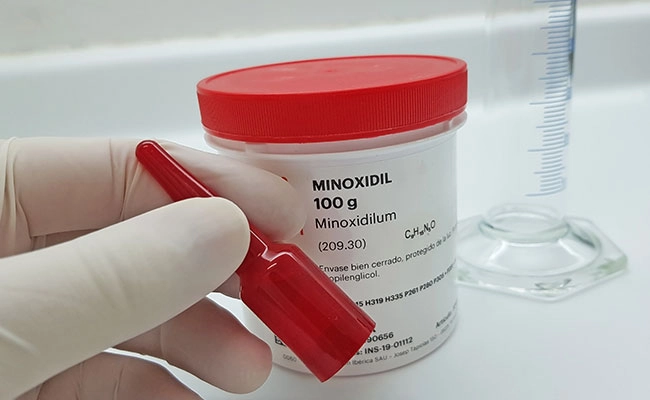
What is minoxidil?
Minoxidil was originally developed as an antihypertensive medication, but over time it was observed that it caused an increase in hair growth.
Since then, its topical use has become established in dermatology as the most widely used non-invasive pharmaceutical option for treating hair loss in both men and women.
The action of minoxidil is associated with:
- prolonging the hair growth phase (anagen phase)
- reducing the duration of the shedding phase (telogen phase), meaning that hair follicles transition back into growth more quickly
- improving microcirculation in the scalp, contributing to the maintenance and enhancement of hair growth
What is minoxidil?
Minoxidil was originally developed as an antihypertensive medication, but over time it was observed that it caused an increase in hair growth.
Since then, its topical use has become established in dermatology as the most widely used non-invasive pharmaceutical option for treating hair loss in both men and women.
The action of minoxidil is associated with:
- prolonging the hair growth phase (anagen phase)
- reducing the duration of the shedding phase (telogen phase), meaning that hair follicles transition back into growth more quickly
- improving microcirculation in the scalp, contributing to the maintenance and enhancement of hair growth
How minoxidil works
Minoxidil is an approved medication by the National Medicines Organization (EOF) and the U.S. Food and Drug Administration (FDA). Although the exact mechanism by which minoxidil acts against hair loss remains partially unclear, there is sufficient scientific evidence explaining its effects, mainly in androgenetic alopecia. Specifically, its use achieves:
- Prolongation of the anagen phase
Keeping hair follicles in the growth phase for a longer period, resulting in stronger, thicker hairs.
- Improving microcirculation in the scalp
Increasing blood flow and the supply of nutrients to the hair follicles.
- Activation of cellular functions
Enhancing the activity and viability of hair follicle cells.
- Mild anti inflammatory action
Maintaining a healthy scalp environment by reducing mild inflammation.
How minoxidil works
Minoxidil is an approved medication by the National Medicines Organization (EOF) and the U.S. Food and Drug Administration (FDA). Although the exact mechanism by which minoxidil acts against hair loss remains partially unclear, there is sufficient scientific evidence explaining its effects, mainly in androgenetic alopecia. Specifically, its use achieves:
- Prolongation of the anagen phase
Keeping hair follicles in the growth phase for a longer period, resulting in stronger, thicker hairs.
- Improving microcirculation in the scalp
Increasing blood flow and the supply of nutrients to the hair follicles.
- Activation of cellular functions
Enhancing the activity and viability of hair follicle cells.
- Mild anti inflammatory action
Maintaining a healthy scalp environment by reducing mild inflammation.
Methods of administration
Minoxidil can be applied in various ways, depending on each individual’s needs, gender, type of hair loss, and ability to incorporate the treatment consistently into their daily routine.
Methods of administration
Minoxidil can be applied in various ways, depending on each individual’s needs, gender, type of hair loss, and ability to incorporate the treatment consistently into their daily routine.
Topical application
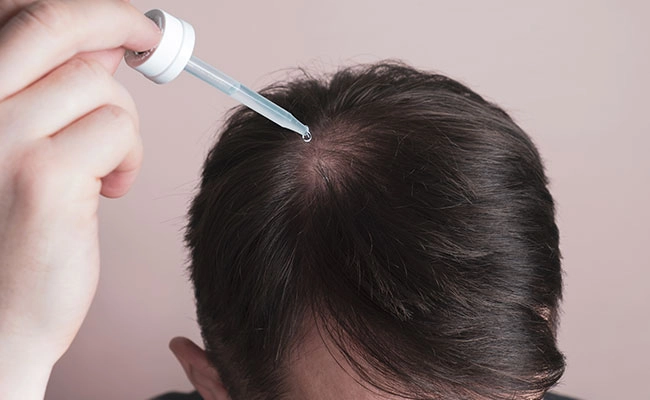
Minoxidil is primarily administered topically, in the form of a solution or foam, applied directly to the scalp. Topical application is the most common and approved form of use for the treatment of androgenetic alopecia.
• Minoxidil solution 2% or 5% :
Applied with a dropper, usually twice a day, on a dry scalp.
• Minoxidil foam 5%:
Applied with the fingers, without the need for measurement, and absorbed more quickly. Used once or twice daily, depending on the specialist’s instructions.
Oral use – Minoxidil pill
In specific cases and only under medical supervision, minoxidil may also be administered orally (oral minoxidil), mainly for resistant forms of alopecia or when topical use is not feasible or effective.
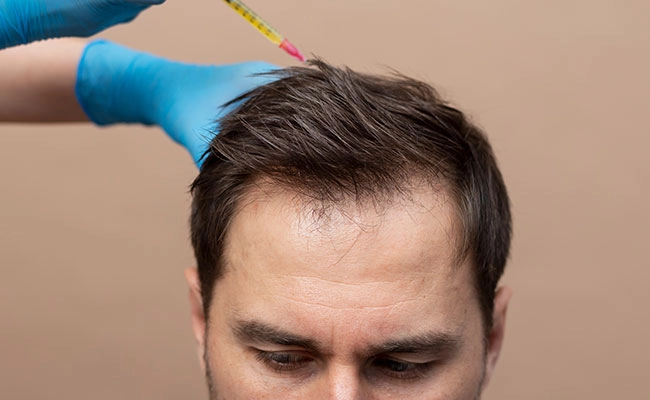
Minoxidil mesotherapy
Minoxidil can also be administered through heterologous mesotherapy, always under medical monitoring, both in terms of dosage and frequency of administration.
Topical application
Minoxidil is primarily administered topically, in the form of a solution or foam, applied directly to the scalp. Topical application is the most common and approved form of use for the treatment of androgenetic alopecia.
• Minoxidil solution 2% or 5% :
Applied with a dropper, usually twice a day, on a dry scalp.
• Minoxidil foam 5%:
Applied with the fingers, without the need for measurement, and absorbed more quickly. Used once or twice daily, depending on the specialist’s instructions.
Oral use – Minoxidil pill
In specific cases and only under medical supervision, minoxidil may also be administered orally (oral minoxidil), mainly for resistant forms of alopecia or when topical use is not feasible or effective.
Minoxidil mesotherapy
Minoxidil can also be administered through heterologous mesotherapy, always under medical monitoring, both in terms of dosage and frequency of administration.
When is the use of minoxidil avoided?
Minoxidil is generally safe when used according to medical instructions, but it is not suitable for everyone. There are specific cases and health conditions in which its use should be avoided or carried out only under medical supervision. In such situations, it is essential that a diagnosis by a specialized physician precedes treatment, in order to assess the medical history and ensure the safety of the therapy.
When is the use of minoxidil avoided?
Minoxidil is generally safe when used according to medical instructions, but it is not suitable for everyone. There are specific cases and health conditions in which its use should be avoided or carried out only under medical supervision. In such situations, it is essential that a diagnosis by a specialized physician precedes treatment, in order to assess the medical history and ensure the safety of the therapy.
Allergy
Individuals with a known allergy to minoxidil or any of the excipients in the formulation.
Irreversible forms of alopecia
Individuals with scarring alopecia or other irreversible forms of hair loss in which the follicles have been destroyed.
Age
Children and teenagers, unless there is a specific medical indication.
Pregnancy and breast feeding
Pregnant or breastfeeding women, as there is insufficient data regarding the safety of the substance in these groups.
Skin lesions
Individuals with skin conditions or irritations on the scalp, where the application of the product may cause further irritation or increased absorption.
Cardiovascular diseases (oral administration)
Patients with severe heart disease or those undergoing antihypertensive treatment, in cases of oral administration, which must be performed strictly under medical supervision.
Allergy
Individuals with a known allergy to minoxidil or any of the excipients in the formulation.
Irreversible forms of alopecia
Individuals with scarring alopecia or other irreversible forms of hair loss in which the follicles have been destroyed.
Age
Children and teenagers, unless there is a specific medical indication.
Pregnancy and breast feeding
Pregnant or breastfeeding women, as there is insufficient data regarding the safety of the substance in these groups.
Skin lesions
Individuals with skin conditions or irritations on the scalp, where the application of the product may cause further irritation or increased absorption.
Cardiovascular diseases (oral administration)
Patients with severe heart disease or those undergoing antihypertensive treatment, in cases of oral administration, which must be performed strictly under medical supervision.
Treatment efficiency
Minoxidil acts gradually, and its effectiveness depends both on consistent use and on the stage of alopecia. Although it does not offer a permanent cure, it significantly helps stabilize hair loss and enhance hair growth.
Timeline of action
• 2–4 months: The first signs of effectiveness are usually mild. A temporary increase in hair shedding (known as the shedding phase) is possible, as older, weakened follicles enter the growth phase again and are replaced.
• 4–6 months: New hair growth begins to appear. At first, it may look like fine, soft fuzz, which gradually becomes thicker and stronger over time.
• 6–12 months: The full response to the treatment becomes evident. In individuals who respond well, an increase in density and stabilization of hair loss is observed.
Minoxidil has been shown to be effective in a significant percentage of users, especially when applied consistently and at early stages of hair loss.
Continuous use is necessary, as discontinuing the treatment gradually leads to the return of hair loss within a few months.
Minoxidil acts gradually, and its effectiveness depends both on consistent use and on the stage of alopecia. Although it does not offer a permanent cure, it significantly helps stabilize hair loss and enhance hair growth.
Timeline of action
• 2–4 months: The first signs of effectiveness are usually mild. A temporary increase in hair shedding (known as the shedding phase) is possible, as older, weakened follicles enter the growth phase again and are replaced.
• 4–6 months: New hair growth begins to appear. At first, it may look like fine, soft fuzz, which gradually becomes thicker and stronger over time.
• 6–12 months: The full response to the treatment becomes evident. In individuals who respond well, an increase in density and stabilization of hair loss is observed.
Minoxidil has been shown to be effective in a significant percentage of users, especially when applied consistently and at early stages of hair loss.
Continuous use is necessary, as discontinuing the treatment gradually leads to the return of hair loss within a few months.
Minoxidil side efects
Minoxidil is generally well tolerated when used topically; however, it may cause side effects, especially at the beginning of treatment or in individuals who are sensitive to the components of the formulation.
In case of a strong reaction or persistent symptoms, it is recommended to discontinue use and consult the treating physician.
Possible side effects:
- Scalp irritation or dryness
- Itching
- Temporary increase in hair shedding during the first weeks (as a result of follicles transitioning into a new growth phase)
Rare side effects:
- Unwanted hair growth in areas outside the scalp (e.g., forehead, face), mainly due to the product coming into contact with the skin during application
- Allergic contact dermatitis
- Dizziness, rapid heartbeat, or low blood pressure (mainly in cases of oral administration or excessive absorption)
Minoxidil for women
When it is used
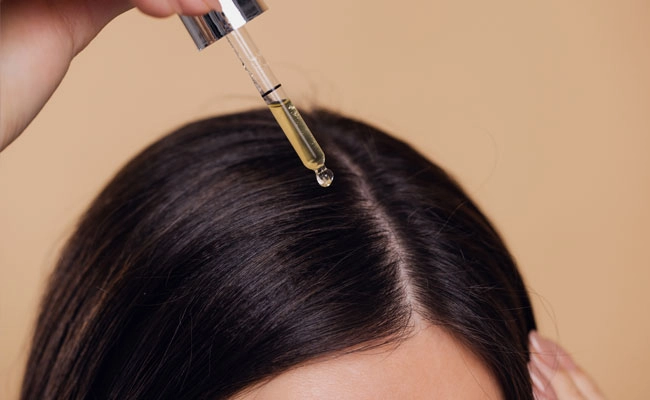
Minoxidil is the most widely used medication for female androgenetic alopecia, a condition characterized by gradual thinning and reduced hair density, mainly in the central scalp area. Its use is recommended in mild to moderate cases, especially when hair loss is at an early stage, as treatment response is typically more effective during this period.
Methods of administration
It is usually administered as a 2% topical solution applied twice daily, or as a 5% foam applied once daily—an option that offers better compliance and comparable effectiveness, with a lower risk of irritation. The first signs of improvement appear after 3–6 months of consistent use and include stabilization of hair loss and the development of new hair, initially as fine fuzz that gradually matures into thicker strands.
Effectiveness of minoxidil in women
Compared to men, women show similar or slightly higher response rates at lower concentrations, but greater care is required during application to avoid unwanted hair growth in areas such as the face or forehead. Long-term and consistent use is essential to maintain the results.
When it is used
Minoxidil is the most widely used medication for female androgenetic alopecia, a condition characterized by gradual thinning and reduced hair density, mainly in the central scalp area. Its use is recommended in mild to moderate cases, especially when hair loss is at an early stage, as treatment response is typically more effective during this period.
Methods of administration
It is usually administered as a 2% topical solution applied twice daily, or as a 5% foam applied once daily—an option that offers better compliance and comparable effectiveness, with a lower risk of irritation. The first signs of improvement appear after 3–6 months of consistent use and include stabilization of hair loss and the development of new hair, initially as fine fuzz that gradually matures into thicker strands.
Effectiveness of minoxidil in women
Compared to men, women show similar or slightly higher response rates at lower concentrations, but greater care is required during application to avoid unwanted hair growth in areas such as the face or forehead. Long-term and consistent use is essential to maintain the results.
Combination with other treatments
Autologous Hair Mesotherapy
Minoxidil can be combined with autologous hair mesotherapy for even more enhanced results against hair loss. Autologous mesotherapy utilizes the patient’s own platelets, naturally stimulating the hair follicles and promoting hair regeneration.
This combination of treatments is suitable for both men and women. It strengthens the hair and significantly helps reduce hair loss.
Hair transplant
Minoxidil is often used as a complementary treatment before and after a hair transplant, as it helps stabilize hair loss and enhance hair growth.
Specifically, its use:
- Before the procedure:
Helps maintain existing follicles and improve hair quality, enhancing the overall appearance of density. - After the procedure:
Is recommended in many cases to support healing and reduce “shock loss,” meaning the temporary shedding of hairs around the transplanted area.
FAQs
Contact Form