Managing Alopecia: All Types & Modern Treatment Methods
Managing alopecia depends mostly on understanding the underlying mechanism behind each individual’s specific type of hair loss. Each type of alopecia stems from different causes and requires a different treatment approach on a case-by-case basis.
Early and accurate diagnosis is the most essential tool for developing the most efficient personalized treatment plan.
Androgenetic Alopecia (Hereditary)
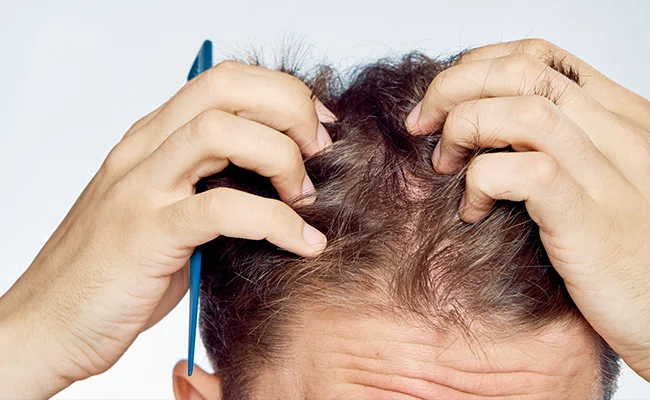
It’s the most common form of hair loss. It’s caused by the genetic sensitivity of hair follicles to dihydrotestosterone (DHT). This hormone leads to the gradual shrinking of hair follicles, known as miniaturization. Hairs become thinner over time and eventually stop growing altogether.
By lowering DHT levels, finasteride can help maintain or increase the number of hair follicles in the growth phase, slowing down and sometimes even reversing follicle miniaturization.
Symptoms
- Receding hairline and temples in men
- Thinning at the crown
- Diffuse thinning on the top of the scalp in women
- Progressive development over time
Treatment Approach
Treatment is based on 3 axes:
- Stabilizing hormonal impact through medical protocols that reduce DHT activity at the follicle level.
- Strengthening the hair follicles through autologous PRP mesotherapy or heterologous mesotherapy treatments.
- This helps increase microcirculation in the scalp and extend the hair’s growth cycle.
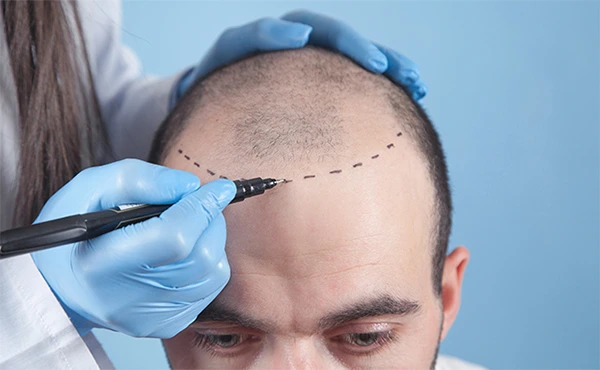
- Restoring the thinning area through hair transplantation, in cases where a significant number of follicles have already been lost.
Telogen Effluvium
It is characterized by generalized thinning over a large area of the scalp, without specific localized patches. It occurs when many hair follicles simultaneously and prematurely enter the telogen (shedding) phase, usually triggered by an internal or external factor.
Common Causes
- Intense psychological or physical stress
- Hormonal changes (postpartum period, thyroid disorders, etc.)
- Iron or vitamin D deficiency
- Certain medications
- Severe illness or surgery
Symptoms
- Sudden increase in hair shedding
- Equal thinning across a large part of the scalp
- Hairline remains intact
Treatment
- Identifying and addressing the root cause, not just the symptom
- Treatments to enhance the hair’s growth cycle
- Nutritional support
- Hormonal regulation
In most cases, telogen effluvium is temporary. An accurate diagnosis can help restrict its extent and prevent it from recurring.
Alopecia Areata
It is an autoimmune condition in which the immune system falsely targets hair follicles as a threat. The follicles are not permanently destroyed, but rather become dormant until the immune response is regulated, either naturally by the organism itself or through an appropriate treatment plan.
Signs & Symptoms
- Round, well-defined patches with no hair
- Can appear on the scalp, eyebrows, or beard
- Often linked to stress or a viral infection
- It occurs intermittently, with flare-ups and periods of remission.
Treatment Approach
- Immunomodulatory treatments to help manage the autoimmune response
- Intralesional corticosteroid or PRP injections for persistent patches
- Topical minoxidil
- Ongoing clinical monitoring
In many cases, hair regrows on its own, but medical intervention can speed up and stabilize the results.
Scarring Alopecia
It is the rarest and most severe form. It results from inflammatory skin conditions that destroy the hair follicles, leading to permanent hair loss in the affected areas.
Clinical Features
- Shiny patches with no visible pores
- Redness or a burning sensation
- Permanent hair loss in the affected areas
Treatment
- Immediate anti-inflammatory treatment to help restrict its spread
- Disease stabilization using steroid treatment
- Surgical restoration only once the condition is inactive and under specific conditions
Conclusion
There is no “one-size-fits-all treatment.” The right approach is combination-based and personalized, built around 4 goals:
- Stabilizing hair loss
- Strengthening and promoting new hair growth
- Restoring density
- Maintaining long-term results
Alopecia can be effectively treated when properly diagnosed. Early intervention significantly increases the likelihood of hair regrowth.