


In the majority of cases, diffuse alopecia is reversible. Once the underlying cause—such as stress, hormonal disorders, or iron deficiency—is identified and appropriately managed, hair shedding ceases and normal hair growth is gradually restored.
Diffuse Alopecia: Definition, Causes, Symptoms & Management
Diffuse alopecia (Telogen Effluvium) is a form of hair loss characterized by a generalized reduction in hair density across the entire scalp. This extensive thinning results from a disruption of the normal hair growth cycle.
Under normal conditions, the majority of scalp hairs (approximately 80%) are in the anagen phase, the active growth stage. In diffuse alopecia, however, a significant number of hairs are prematurely driven out of the anagen phase and enter the telogen phase as a result of an external or internal triggering factor.
The telogen phase represents the final stage of the hair life cycle. At this stage, hairs normally remain for about three months before being shed, as they are gradually displaced by new hairs growing in the same follicles.
In diffuse alopecia, this pathological interruption of the hair cycle leads to a loss of synchrony between the growth phases, resulting in diffuse thinning of the scalp hair during the period in which new hairs are still in the process of regrowth.
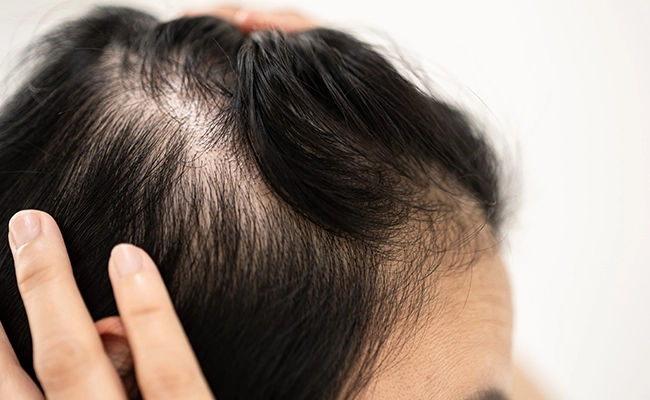
Diffuse alopecia (Telogen Effluvium) is a form of hair loss characterized by a generalized reduction in hair density across the entire scalp. This extensive thinning results from a disruption of the normal hair growth cycle.
Under normal conditions, the majority of scalp hairs (approximately 80%) are in the anagen phase, the active growth stage. In diffuse alopecia, however, a significant number of hairs are prematurely driven out of the anagen phase and enter the telogen phase as a result of an external or internal triggering factor.
The telogen phase represents the final stage of the hair life cycle. At this stage, hairs normally remain for about three months before being shed, as they are gradually displaced by new hairs growing in the same follicles.
In diffuse alopecia, this pathological interruption of the hair cycle leads to a loss of synchrony between the growth phases, resulting in diffuse thinning of the scalp hair during the period in which new hairs are still in the process of regrowth.
Hair growth cycle
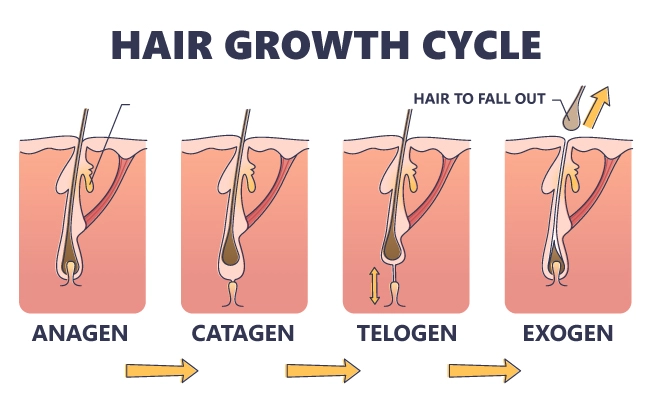
Scalp hair follows a physiological growth cycle that consists of four distinct phases: anagen, catagen, telogen, and exogen.
The anagen phase is the longest stage, lasting approximately 2 to 8 years. During this phase, about 85–90% of scalp hairs are actively growing. The catagen phase lasts around two weeks and represents a transitional stage, during which hair growth gradually ceases.
This is followed by the telogen phase, a resting phase that lasts approximately 2–3 months. At the end of this phase, the hair shaft is shed during the exogen phase, while new hair growth simultaneously begins in the same follicle.
Therefore, the daily loss of approximately 50 to 100 hairs is considered physiological and part of the normal hair renewal process. However, excessive hair shedding, particularly when associated with a shortened anagen phase, may be indicative of pathological hair loss and warrants further clinical evaluation.
Hair growth cycle
Scalp hair follows a physiological growth cycle that consists of four distinct phases: anagen, catagen, telogen, and exogen.
The anagen phase is the longest stage, lasting approximately 2 to 8 years. During this phase, about 85–90% of scalp hairs are actively growing. The catagen phase lasts around two weeks and represents a transitional stage, during which hair growth gradually ceases.
This is followed by the telogen phase, a resting phase that lasts approximately 2–3 months. At the end of this phase, the hair shaft is shed during the exogen phase, while new hair growth simultaneously begins in the same follicle.
Therefore, the daily loss of approximately 50 to 100 hairs is considered physiological and part of the normal hair renewal process. However, excessive hair shedding, particularly when associated with a shortened anagen phase, may be indicative of pathological hair loss and warrants further clinical evaluation.
When does it occur
The onset of diffuse alopecia may be sudden or recurrent. It affects a large proportion of adults at some point in their lives and may be attributed to a wide range of triggering factors.
In most cases, the interruption of the normal hair growth cycle is the result of metabolic stress, such as chemotherapy, pregnancy, puberty, surgical procedures, or severe chronic illness, as well as emotional trauma or a systemic physical insult.
Why the diagnosis of diffuse alopecia is challenging
The 3–4 month latency period between the causative event and the onset of shedding acts as a significant obstacle to prompt etiological identification.
Consequently, by the time hair loss becomes evident, the individual may have already recovered from the precipitating condition or no longer be exposed to the triggering factors.
When does it occur
The onset of diffuse alopecia may be sudden or recurrent. It affects a large proportion of adults at some point in their lives and may be attributed to a wide range of triggering factors.
In most cases, the interruption of the normal hair growth cycle is the result of metabolic stress, such as chemotherapy, pregnancy, puberty, surgical procedures, or severe chronic illness, as well as emotional trauma or a systemic physical insult.
Why the diagnosis of diffuse alopecia is challenging
The 3–4 month latency period between the causative event and the onset of shedding acts as a significant obstacle to prompt etiological identification.
Consequently, by the time hair loss becomes evident, the individual may have already recovered from the precipitating condition or no longer be exposed to the triggering factors.
How diffuse alopecia progresses
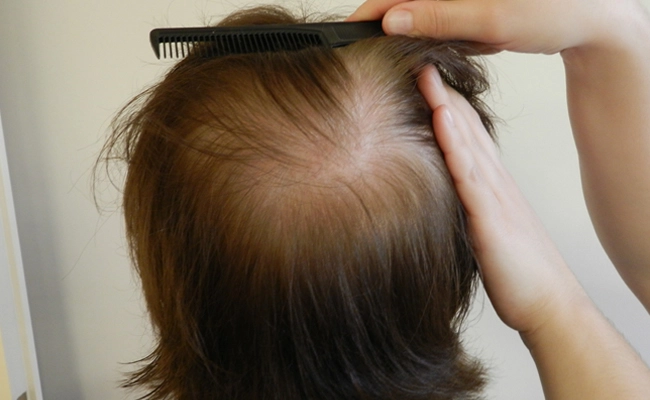
Diffuse alopecia is characterized by a uniform and generalized reduction in hair density. It primarily affects the scalp, although it may also involve body hair in some cases.
The course of the condition is closely time-dependent, as both the extent of thinning and the severity of its impact are directly related to the duration of hair shedding.
Accordingly, based on the temporal pattern of hair loss, diffuse alopecia can be classified into three clinical forms:
Acute diffuse alopecia
Characterized by sudden onset of hair shedding.
Subacute diffuse alopecia
In which hair loss persists for several months
Chronic diffuse alopecia
Characterized by recurrent or continuous hair thinning lasting longer than six months
How diffuse alopecia progresses
Diffuse alopecia is characterized by a uniform and generalized reduction in hair density. It primarily affects the scalp, although it may also involve body hair in some cases.
The course of the condition is closely time-dependent, as both the extent of thinning and the severity of its impact are directly related to the duration of hair shedding.
Accordingly, based on the temporal pattern of hair loss, diffuse alopecia can be classified into three clinical forms:
Acute diffuse alopecia
Characterized by sudden onset of hair shedding.
Subacute diffuse alopecia
In which hair loss persists for several months
Chronic diffuse alopecia
Characterized by recurrent or continuous hair thinning lasting longer than six months
Causes of diffuse alopecia
The following are commonly cited as potential causes of diffuse alopecia:
Causes of diffuse alopecia
The following are commonly cited as potential causes of diffuse alopecia:
- Stress
- Physical or psychological trauma
- Chronic diseases, such as systemic lupus erythmatosus, hepatic disorders and renal disease
- Immunizations
- Harmful or triggering factors
- Thyroid disorders
- Anemia
- Various pharmacological treatments. such as non-steroid anti-inflammatory drugs(NSAIDs)
- Strict diets
- Postoperative stress
- Heavy metal poisoning
- Inititiation or discontinuation of oral contraceptive pills
- Stress
- Physical or psychological trauma
- Chronic diseases, such as systemic lupus erythmatosus, hepatic disorders and renal disease
- Immunizations
- Harmful or triggering factors
- Thyroid disorders
- Anemia
- Various pharmacological treatments. such as non-steroid anti-inflammatory drugs(NSAIDs)
- Strict diets
- Postoperative stress
- Heavy metal poisoning
- Inititiation or discontinuation of oral contraceptive pills
Types of Diffuse Alopecia Induced by Harmful Factors
Diffuse alopecia may develop as a result of exposure to various harmful or triggering factors. These factors interfere with the hair growth cycle and ultimately lead to hair shedding.
Diffuse Alopecia Due to Endocrine Disorders
This form is caused by hormonal imbalances within the body. It is commonly associated with conditions such as hypothyroidism, hyperthyroidism, diabetes mellitus, pregnancy, and the use of oral contraceptives.
Diffuse Alopecia Due to Medications and Chemical Agents
Certain pharmaceutical agents and chemical substances may adversely affect hair growth. These include antithyroid medications, anticoagulants, cytotoxic agents, antipsychotic drugs, hypervitaminosis A, boric acid, and thallium salts found in certain insecticides.
Diffuse Alopecia Due to Nutritional and Metabolic Disorders
This type is associated with deficiencies of nutrients essential for hair health. Examples include protein deficiency, iron deficiency, zinc (Zn) deficiency, and essential fatty acid deficiency.
Types of Diffuse Alopecia Induced by Harmful Factors
Diffuse alopecia may develop as a result of exposure to various harmful or triggering factors. These factors interfere with the hair growth cycle and ultimately lead to hair shedding.
Diffuse Alopecia Due to Endocrine Disorders
This form is caused by hormonal imbalances within the body. It is commonly associated with conditions such as hypothyroidism, hyperthyroidism, diabetes mellitus, pregnancy, and the use of oral contraceptives.
Diffuse Alopecia Due to Medications and Chemical Agents
Certain pharmaceutical agents and chemical substances may adversely affect hair growth. These include antithyroid medications, anticoagulants, cytotoxic agents, antipsychotic drugs, hypervitaminosis A, boric acid, and thallium salts found in certain insecticides.
Diffuse Alopecia Due to Nutritional and Metabolic Disorders
This type is associated with deficiencies of nutrients essential for hair health. Examples include protein deficiency, iron deficiency, zinc (Zn) deficiency, and essential fatty acid deficiency.
Female diffuse alopecia
Diffuse alopecia occurs more frequently in women and is commonly associated with hormonal, metabolic, and nutritional factors.
Hormonal fluctuations can significantly affect the hair growth cycle, leading to increased hair shedding at various stages of a woman’s life.
Most common causes of diffuse alopecia in women
Menopause
Hormonal changes lead to progressive thinning
Postpartum period
Associated with postpartum hair shedding, which typically occurs 3–4 months after childbirth.
Use of oral contraceptives
Hormonal fluctuations may trigger hair loss, particularly after discontinuation.
Pregnancy
Elevated estrogen levels influence the hair growth cycle, while the postpartum decline in estrogen triggers hair shedding.
Polycystic ovary syndrome (PCOS)
Hyperandrogenism adversely affects hair growth.
Nutritional deficiencies
Iron deficiency, zinc deficiency, B-complex vitamin deficiencies, and protein deficiency.
Menopause
Hormonal changes lead to progressive thinning
Postpartum period
Associated with postpartum hair shedding, which typically occurs 3–4 months after childbirth.
Use of oral contraceptives
Hormonal fluctuations may trigger hair loss, particularly after discontinuation.
Pregnancy
Elevated estrogen levels influence the hair growth cycle, while the postpartum decline in estrogen triggers hair shedding.
Polycystic ovary syndrome (PCOS)
Hyperandrogenism adversely affects hair growth.
Nutritional deficiencies
Iron deficiency, zinc deficiency, B-complex vitamin deficiencies, and protein deficiency.
Postpartum Hair Loss (Postpartum Telogen Effluvium)
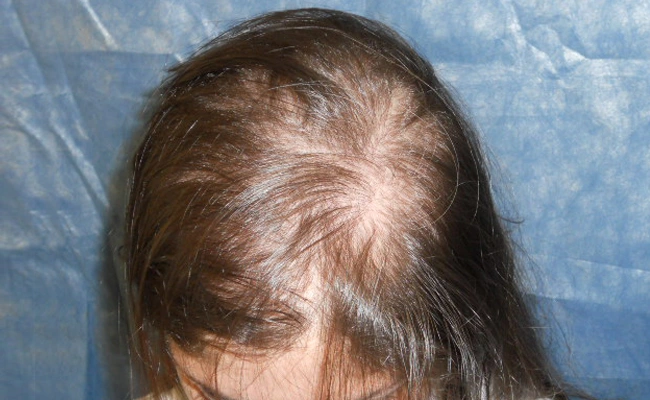
Many women experience scalp hair thinning approximately 3–4 months after pregnancy. This phenomenon is attributed to the hormonal fluctuations that occur during and following gestation.
During pregnancy, estrogen and progesterone levels are elevated. These hormones prolong the anagen phase, allowing a greater number of hairs to remain in active growth than under normal physiological conditions. As a result, hair often appears denser and fuller during this period.
After childbirth, estrogen and progesterone levels decline abruptly. Hairs that were retained longer in the anagen phase suddenly transition into the telogen phase, leading to increased hair shedding. This process is known as postpartum hair loss and is fully reversible. Hair density typically returns to baseline within approximately nine months.
Postpartum Hair Loss (Postpartum Telogen Effluvium)
Many women experience scalp hair thinning approximately 3–4 months after pregnancy. This phenomenon is attributed to the hormonal fluctuations that occur during and following gestation.
During pregnancy, estrogen and progesterone levels are elevated. These hormones prolong the anagen phase, allowing a greater number of hairs to remain in active growth than under normal physiological conditions. As a result, hair often appears denser and fuller during this period.
After childbirth, estrogen and progesterone levels decline abruptly. Hairs that were retained longer in the anagen phase suddenly transition into the telogen phase, leading to increased hair shedding. This process is known as postpartum hair loss and is fully reversible. Hair density typically returns to baseline within approximately nine months.
Diagnosis of diffuse alopecia
Diagnosis of diffuse alopecia
Management of diffuse alopecia
Management of diffuse alopecia
FAQs
Contact Form