Trichotillomania: Understanding Hair Pulling
and its Effects on Hair
Trichotillomania (TTM) is a psychological disorder in which an individual experiences a strong urge to pull out their own hair—most commonly from the scalp, eyebrows, or eyelashes.
This behavior is often associated with internal tension or anxiety and is typically followed by a sense of temporary relief after the act. Over time, repeated hair pulling may lead to visible bald patches, scarring, or even permanent damage to the skin.
Trichotillomania usually begins in childhood or adolescence (around the ages of 10 to 13), while in adults it often takes on a more chronic course. It is important to note that trichotillomania is distinct from obsessive-compulsive disorder (OCD). Although they may appear similar, TTM is not necessarily accompanied by intrusive thoughts or obsessions. Instead, the urge to pull hair often arises suddenly, frequently without conscious awareness, as a mechanical or reflexive response.

What are the signs of trichotillomania?
Trichotillomania does not always present in the same way. Some individuals pull their hair unconsciously, while others do so intentionally when under stress, bored, or experiencing intense emotions. Common signs include:
- Recurrent hair pulling from the scalp, eyebrows, eyelashes, or other areas
- Visible hairless patches or areas of thinning
- Habits such as playing with hair, twisting it, biting it, or—in some cases—swallowing it
- Repeated attempts to stop the behavior without success
- Feelings of shame or guilt following the behavior
Many people with trichotillomania attempt to conceal the signs—for example, by styling their hair differently, wearing hats, using makeup, or avoiding social situations.
Diagnosis and treatment
The diagnosis of trichotillomania is made by a qualified psychologist or psychiatrist, primarily through clinical interview and observation. There are no blood tests or imaging studies that can confirm the diagnosis. The specialist will seek to understand when the behavior began, how often it occurs, what triggers it, and how it affects the individual’s daily life. It is also important to rule out other causes of hair loss, such as dermatological conditions or hormonal disorders.
Trichotillomania can be treated, but it usually requires a combination of therapeutic approaches. The most effective treatment is cognitive behavioral therapy (CBT), and more specifically a technique known as habit reversal training (HRT). Through this approach, individuals learn to:
- recognize when the urge to pull hair arises,
- prevent the behavior or replace it with alternative, non-destructive actions or habits (e.g. stress balls, tactile objects), and
- manage anxiety and stress, which often act as triggering factors.
In some cases, pharmacological treatment (such as antidepressants) may also be prescribed, particularly when trichotillomania coexists with other conditions such as anxiety or depression.

Restoration after trichotillomania: What happens to the hair that has been lost
When trichotillomania is brought under control and the pulling behavior stops, in many cases hair has the ability to regrow, provided that the hair follicles have not suffered permanent damage. The body has a natural repair mechanism, and once the constant pulling ceases, the follicles can gradually reactivate.
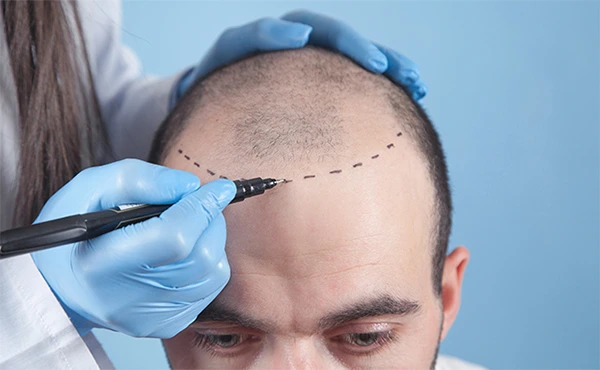
In cases where scarring or destruction of the hair follicles has occurred, hair restoration through hair transplantation can be a realistic and effective solution. Transplantation helps cover bare areas and restore symmetry and a natural appearance to the hair.
However, for the result to be truly stable and lasting, a key prerequisite is that the trichotillomania behavior has already been controlled. If the urge to pull continues, there is a risk that the newly transplanted hairs will be damaged, just like the previous ones. For this reason, hair transplantation is not the first step, but rather the final stage of a restoration journey—after psychological stabilization and the cessation of the harmful habit.
Transplantation may involve either small areas, such as the eyebrows or selected bald patches on the scalp, or larger areas when hair loss is more extensive. The technique, the number of grafts, and the restoration plan are always determined on an individualized basis, in order to ensure a natural and harmonious result.
The success of the procedure is not limited to aesthetic improvement alone. For many people who have experienced trichotillomania, restoring hair growth also symbolizes the restoration of self-confidence—an essential step toward psychological balance and a sense of wholeness.
FAQs
Are you looking for a solution to hair loss?
Proper information on effective hair loss treatment is the first step before any therapy.
Contact our clinics for a personalized diagnosis.