


Scarring Alopecia (Cicatrical): Causes, Symptoms & Treatments
Cicatricial alopecia (scarring alopecia) refers to a group of rare disorders that destroy hair follicles and replace them with scar tissue, resulting in permanent skin damage.
It represents an underlying pathological condition caused by inflammatory processes occurring beneath the surface of the skin.
Clinical features include hair loss and cutaneous scarring. During this process, the epidermis gradually deteriorates and may develop erythema.
Cicatricial alopecia affects both men and women, with no age restriction. In many cases, hair loss is slow and progressive, making early diagnosis challenging.
Early diagnosis by a specialist may help slow down or stabilize disease progression.
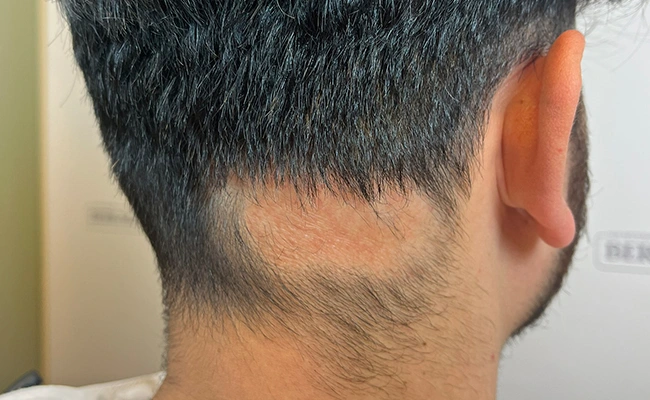
Cicatricial alopecia (scarring alopecia) refers to a group of rare disorders that destroy hair follicles and replace them with scar tissue, resulting in permanent skin damage.
It represents an underlying pathological condition caused by inflammatory processes occurring beneath the surface of the skin.
Clinical features include hair loss and cutaneous scarring. During this process, the epidermis gradually deteriorates and may develop erythema.
Cicatricial alopecia affects both men and women, with no age restriction. In many cases, hair loss is slow and progressive, making early diagnosis challenging.
Early diagnosis by a specialist may help slow down or stabilize disease progression.
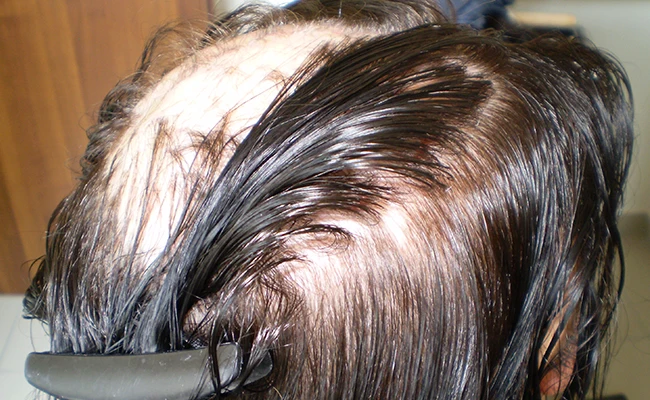
Clinical presentation of scarring alopecia
There are two main patterns in which cicatricial alopecia may present.
Mild (Indolent) Cicatricial Alopecia
Cicatricial alopecia may begin in a mild and subtle manner, without prominent symptoms. Hair loss is gradual and often goes unnoticed. There is typically no pain or irritation, and thinning becomes apparent only once the condition has already progressed. This clinically silent form often leads to delayed diagnosis.
Aggressive Cicatricial Alopecia
In other cases, cicatricial alopecia presents in a more severe and active form. It may develop suddenly and is accompanied by scalp pain, pruritus, erythema, and a burning sensation. Ongoing inflammation leads to rapid destruction of hair follicles. Immediate evaluation by a dermatologist is essential.
Clinical presentation of scarring alopecia
There are two main patterns in which cicatricial alopecia may present.
Mild (Indolent) Cicatricial Alopecia
Cicatricial alopecia may begin in a mild and subtle manner, without prominent symptoms. Hair loss is gradual and often goes unnoticed. There is typically no pain or irritation, and thinning becomes apparent only once the condition has already progressed. This clinically silent form often leads to delayed diagnosis.
Aggressive Cicatricial Alopecia
In other cases, cicatricial alopecia presents in a more severe and active form. It may develop suddenly and is accompanied by scalp pain, pruritus, erythema, and a burning sensation. Ongoing inflammation leads to rapid destruction of hair follicles. Immediate evaluation by a dermatologist is essential.
Categories
Cicatricial alopecia is classified into two main categories, depending on whether inflammation originates from the hair follicles themselves (primary) or occurs secondarily due to external damage to the skin.
Primary Cicatricial Alopecia
In the primary form, inflammation of the scalp directly targets the hair follicles, leading to their destruction and replacement with scar tissue.
The inflammatory process begins within the follicles and progresses to permanent hair loss. This category includes conditions such as lichen planopilaris and discoid lupus erythematosus.
Secondary Cicatricial Alopecia
In secondary cicatricial alopecia, skin scarring does not originate from the hair follicles but results from external factors or other cutaneous injuries.
Causes may include trauma, burns, infections, radiation, or other conditions that damage the skin and disrupt normal hair growth.
How is scarring alopecia caused?
Cicatricial alopecia encompasses a group of disorders characterized by destruction of the hair follicles and subsequent scarring of the skin.
The causes may vary and are often related to inflammatory, autoimmune, or secondary scalp injuries.
Autoimmune diseases
Such as lichen planopilaris and discoid lupus erythematosus, in which the immune system attacks the hair follicles.
Chronic inherited or inflammatory dermatoses
For example scleroderma, aplasia cutis, ichthyosis, and related conditions, which progressively alter the structure of the skin.
Microbial or fungal infections
Which, if left untreated, may lead to tissue destruction.
Wounds or burns
Resulting in secondary scarring of the affected areas.
Neoplasms, radiation or surgical procedures
Which may cause permanent damage to localized regions of the skin.
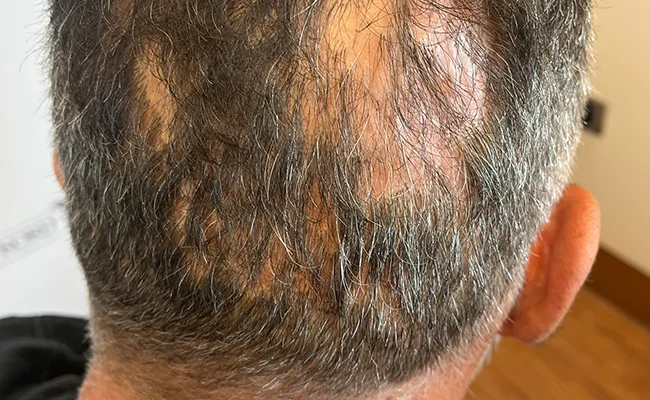
How is scarring alopecia caused?
Cicatricial alopecia encompasses a group of disorders characterized by destruction of the hair follicles and subsequent scarring of the skin.
The causes may vary and are often related to inflammatory, autoimmune, or secondary scalp injuries.
Autoimmune diseases
Such as lichen planopilaris and discoid lupus erythematosus, in which the immune system attacks the hair follicles.
Chronic inherited or inflammatory dermatoses
For example scleroderma, aplasia cutis, ichthyosis, and related conditions, which progressively alter the structure of the skin.
Microbial or fungal infections
Which, if left untreated, may lead to tissue destruction.
Wounds or burns
Resulting in secondary scarring of the affected areas.
Neoplasms, radiation or surgical procedures
Which may cause permanent damage to localized regions of the skin.
What are the symptoms
The symptoms of cicatricial alopecia vary depending on the type and stage of the disease. In some cases, inflammation is clinically silent, with no obvious signs, while in others it is accompanied by discomfort or visible changes of the scalp.
Common symptoms include:
The presence of hairless areas where the skin appears smooth or shiny, with absence of visible hair follicles.
Erythema, scaling, or follicular hyperkeratosis around hair follicles during active inflammatory phases.
A burning sensation or pruritus, which may precede hair loss.
Scalp tenderness or pain on palpation.
Scarring or changes in skin texture, particularly in more advanced stages.
Diagnosis of scarring (cicatrical) alopecia
The diagnosis of cicatricial alopecia requires specialized dermatological evaluation, as its clinical presentation may resemble other forms of hair loss. Accurate identification of the type and disease activity is essential in order to prevent permanent hair loss.
Clinical examination
The clinician assesses the pattern of hair loss, skin morphology, and the presence of inflammatory signs such as erythema, scaling, or scarring.
Trichoscopy
A non-invasive technique that allows detailed visualization of hair follicles and the surrounding scalp. Findings such as absence of follicular openings or perifollicular inflammation are characteristic.
Scalp biopsy
This is the gold standard for confirmation. A skin sample is obtained for histopathological analysis to determine the type of inflammation and the extent of follicular destruction.
Blood tests (when indicated)
These may be requested to investigate systemic conditions, such as lupus erythematosus or thyroid disorders, when clinically suspected.
Early diagnosis, even before complete hair loss occurs, significantly improves the likelihood of effective disease control and limits further progression.
Management of Cicatricial Alopecia
The therapeutic approach to cicatricial alopecia focuses primarily on suppressing inflammation and preventing further hair loss, as areas where follicles have already been destroyed are generally not reversible. Treatment options may include the following:
Pharmacological therapy (control of inflammation)
Corticosteroids
- Topical (creams or intralesional injections)
- Systemic (in advanced or rapidly progressive forms)
Immunomodulatory agents
Such as hydroxychloroquine, methotrexate, or cyclosporine
Local care and supportive measures
Avoidance of scalp trauma (e.g. chemical treatments, heat exposure, traction)
Use of antiseptic shampoos to control secondary infections
Therapies aimed at strengthening unaffected areas (e.g. topical minoxidil)
Hair transplantation (in stable disease)
Hair transplantation may be considered only when the disease has remained inactive for at least 1–2 years, as active inflammation can lead to destruction of transplanted grafts.
Management of Cicatricial Alopecia
The therapeutic approach to cicatricial alopecia focuses primarily on suppressing inflammation and preventing further hair loss, as areas where follicles have already been destroyed are generally not reversible. Treatment options may include the following:
Pharmacological therapy (control of inflammation)
Corticosteroids
- Topical (creams or intralesional injections)
- Systemic (in advanced or rapidly progressive forms)
Immunomodulatory agents
Such as hydroxychloroquine, methotrexate, or cyclosporine
Local care and supportive measures
Avoidance of scalp trauma (e.g. chemical treatments, heat exposure, traction)
Use of antiseptic shampoos to control secondary infections
Therapies aimed at strengthening unaffected areas (e.g. topical minoxidil)
Hair transplantation (in stable disease)
Hair transplantation may be considered only when the disease has remained inactive for at least 1–2 years, as active inflammation can lead to destruction of transplanted grafts.
FAQs
Contact Form